Calling all emerging arts leaders in the ACT region – this is your chance to be heard!
We Should Talk is the first in a series of informal networking and discussion opportunities for the ACT region’s arts sector, presented by the Childers Group.
Local emerging arts leaders Jack Lloyd (Belconnen Arts Centre), Rosanna Stevens (Scissors Paper Pen), Yolande Norris (BIG hART) and Michael Bailey (ACT Museums and Galleries) will facilitate discussions that allow you to raise the big issues in arts leadership in the ACT and start to identify new directions for the sector. We want to hear your thoughts on what is important to you – from skills development and career advancement, to balancing work and life and art – and to find answers to the burning questions.
When and where is this happening?
4pm-6pm on Wednesday 30 September at CMAG.
This will also be an excellent time to meet other emerging leaders and build your networks over a glass of wine. Established arts leaders are of course welcome too – come along and meet the kids who will run the joint in a few years.
Admission is free ($10 donations encouraged and gratefully appreciated, at the door), the bar is open (18+ only, sorry) and bookings are essential via Eventbrite.
We can’t wait to meet you!
*
We Should Talk is presented by The Childers Group and supported by the Cultural Facilities Corporation.
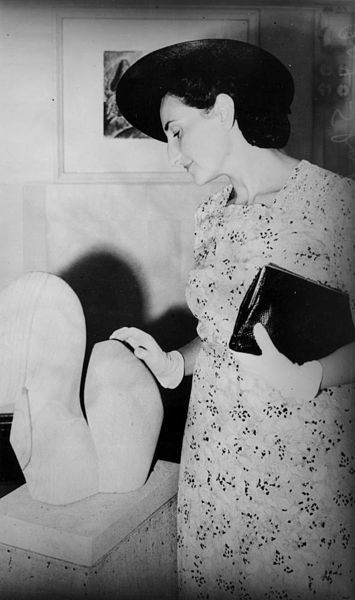
Viennese art critic Dr. Gertrude Langer inspecting a local art show, Brisbane, 1940 (Source: Wikimedia Commons)
If you write a book, or choreograph a dance, or compose a song, or produce a play or film, and no one reviews it, could it be that you never created it in the first place?
In a way that’s what was discussed at this year’s Childers Group forum. Focussing on the Role of the Arts critic, on 18 October 2013 at the Gorman House Arts Centre in Canberra we gathered together a wide range of reviewers, critics, and arts leaders/thinkers as well as a lively and engaged audience to spark a conversation. Who is an arts critic? What exactly is it that they do? How important is their work – does it matter at all? What makes a good review? Does a reviewer have responsibilities? Are there more or less reviews going on these days? And what of the online environment: does this open up opportunities for more review, but, if so, what sort of quality can we expect (or demand)? What’s the nature of the ACT’s culture of review? And, perhaps most importantly, where do we go from here? What are the challenges ahead? If you weren’t able to squeeze yourself inside the Bogong Theatre on the 18th, then you’ve now got a bit of a sense about what was discussed.
Going back to that opening sentence: if there’s one thing that artists struggle with, truly struggle with, it’s the silence, the silence that can meet a piece of work. For months and years, sometimes even decades, an artist slowly but surely brings a work to the world. Most likely there’ll be some kind of celebration – an opening night, a launch, perhaps even just a party on the deck at home. There’ll be champagne and cheese; there’ll be slaps on the shoulder and the odd kiss on the cheek. But the next morning? Well, there’ll be that silence. Sure, over time, people – good people, kind people – will offer up some kind of response. ‘Congrats, it looks wonderful.’ ‘I loved it – you’re amazing.’ ‘Not sure. I kinda wasn’t terribly moved.’ (This last one from the brave but honest and much-needed friend!) Except this isn’t review or criticism; it is response. Artists want response, but they also want more, the greedy devils.
A good piece of creation operates on many levels: there’s the conceptual, the meaningful, the emotionally engaging, and then there’s the sheer entertainment side of things. A good piece of creation sends ripples out into the world. A good piece of creation – sometimes, rarely – changes things. A good piece of creation matters; it can matter more than we can ever possible know. It’s this that a reviewer might explore: they might (should?) situate an artist’s work in a broader context, investigate what the artist (and also theatre, publisher, gallery etc) was trying to achieve, and why this might have any broader resonance, and then come to some kind of conclusion.
Whilst it might help a consumer make a decision, say in the way a restaurant review could, but it is much more. It is not more opinion. It is not simply a recommendation.
As it was said at the forum, a good review ‘illuminates’.
What else was said at the forum? Towards the bottom of this post is the raw data, which is code for ‘the notes we scratched out on a napkin while standing at the back of the crowd’. If you attended, and see weaknesses in these notes, send us an email and we’ll correct/expand them. Also, please have a read of two thoughtful responses from two bloggers who were there: Whispering Gums and Only the Sangfroid (‘If art criticism is going to have a place in the world of tomorrow, it’s going to have to re-imagine itself’); there’s also this piece by Kim Anderson that we published on this site, courtesy of Art Monthly.
But there were two key issues/opportunities raised during the discussion on the 18th, and there’s the challenge – for the community could take them up.
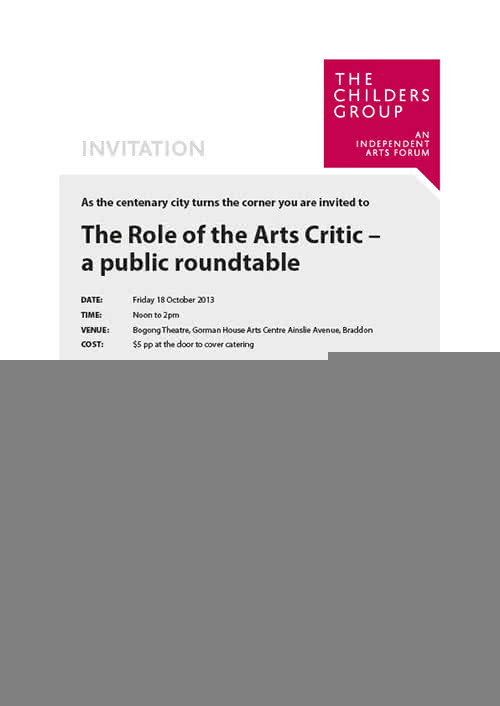
The Childers Group’s ‘Role of the Arts Critic’ forum, 18 October 2013, Gorman House Arts Centre
The first is that while the ACT does indeed have a fairly robust culture of criticism, through the traditional print media, other press outlets, and the blogosphere, there is an opportunity for an arts organisation to deliver – perhaps on an annual basis – a master-class in writing arts review and criticism. As was raised at the forum, Realtime, which bills itself as ‘Australia’s critical guide to international contemporary arts’, would be more than happy to come to the ACT to deliver these workshops. All it would take is someone to make a phone-call. Not only would this initiative build skills in reviewing, but would also increase the number of reviewers, and this would be an excellent outcome indeed – for all.
The second issue/opportunity: doesn’t the ACT region, the core of which, Canberra, has been celebrating its centenary, deserve a high-quality ‘journal’ dedicated to review? Wouldn’t that be a brilliant legacy of 2013? Might that be the way that we as a cultural community continue to grow and expand and deepen? Could that be that’s how we become even better artists? Could that be how we become an even better region? The technology is at our finger tips and much of it costs nothing; it is also obvious that we have a community that comprises good critical and creative thinkers, so we’ve got the writers.
We can make this happen. And maybe, just maybe, it would help inform our audiences, help connect with our community, and also – now this would be the greatest outcome of all – help keep that silence at bay.
Here’s that ‘raw data’.
The nature of criticism:
criticism is a serious and public function
a critic must have a critical view point, an in-depth contention
a review should illuminate
a review should also understand a works creative, cultural, social and political context
a critic should be disinterested, as in ‘stepped back’ back a little from the work
the review should be as artful as the work reviewed
the reviewer should know their audience – is it an arts audience or the general populace
the criticism is valuable if it’s informed
it all comes down to the expertise of the reviewer
a reviewer needs ‘street cred’
but whose street cred?
criticism should engage
criticism should be about knowledge
criticism is about starting a public discussion
a review should further dialogue
a review is about advancing the art form
sometimes critics have to go straight to the jugular
but what’s the point in a critic being destructive?
critics should provide insight
a critic is a trader of ideas
a reviewer must be honest, which can be difficult
how can/should we define ‘qualified opinion’ or ‘quality comment’?
there’s no such thing as objective criticism
some critics are terrified/anxious about taking on the significant artists
a critic who themselves can’t take criticism doesn’t make a good critic!
Criticism and its readers:
people read reviews to find out what’s happening, to be informed; so a critic is someone who tells you what’s going on
the public is looking for criticism; they don’t want to the critic to hold back
in Australia, people don’t take online critics seriously (and artists still yearn for print review)
Criticism in the ACT:
Canberra is a culturally engaged community, there are many events across parts of society, so there’s limited press space for review
the city’s still feeling the loss of Muse Magazine
there are three pillars in the arts: artists, audiences, and interaction (i.e. review, criticism, discussion) – the interaction side of things needs to be strengthened in the ACT, though it’s no different to anywhere else
issue: Canberra is small, ‘incestuous’ – it’s hard to get artists writing about each other
the public discussion about public art in the ACT didn’t bring out a nuanced discussion
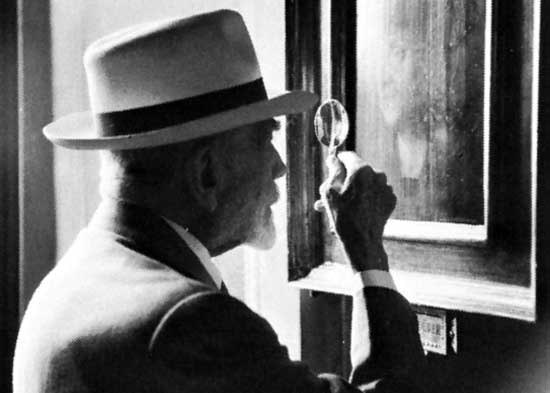
How important is it that we have a culture of robust and thoughtful arts criticism and dialogue? (Image source: Wiki Commons)
Criticism and the artist:
unfavourable criticism that comes from ignorance is hurtful
what do artists get out of arts criticism?
the worse thing is to be not to be reviewed at all
artists, if they choose, can incorporate criticism into the development of their work/practice
artists need to be resilient
but if an artist has a deliberately thick skin they might not be a good artist
artists are often highly critical of each other
artists should exercise their own critical faculties
Challenges for the future:
building expertise in on-line reviewing i.e. making sure online criticism is informed
see how restaurant reviews work – they’re very popular – and use that model for the arts?
due to limited payment, not every media outlet can attract the best critic/writer – this is a challenge
while newspapers are places where debate happens, they don’t have a moral duty to review, including ACT artists or amateur/school productions – so who takes on that role?
what do we do with critical silence?
arts organisations have a role to place in building resilience
A significant opportunity:
for an organisation or a number of organisations to host workshops and forums to build skills in reviewing and being a reviewer
who’s up to take this on?
*
The panelists at our forum were: Robyn Archer AO (Creative Director, Centenary of Canberra), Kerry-Anne Cousins (visual arts critic), Anni DoyleWawrzynczak (contemporary arts critic), Roslyn Dundas (CEO, Ausdance National), Marion Halligan AM (author, critic), Cris Kennedy (film critic), Helen Musa (Canberra Critics Circle), Jack Waterford AM (Editor-at-large, Canberra Times), Caroline Stacey (CEO/Artistic Director, The Street Theatre), and Ashley Thomson (Editor, BMA Magazine). The forum was facilitated by Yolande Norris. Thanks and gratitude to you all for your time and being involved so enthusiastically.
On Wednesday 18 April 2012 at The Street Theatre in Canberra, the Childers Group held its first forum, ‘The Arts in the ACT Region: Burning Issues and Radical Ideas’. The invited special guests were:Robyn Archer, Creative Director of the Centenary of Canberra; Vicki Dunne, ACT Opposite Spokesperson for the Arts; Yolande Norris, You Are Here Festival Producer; Caroline Le Couteur, Greens Spokesperson for the Arts; and Omar Musa, poet and performer.
Each special guest was asked to present a burning issue and a radical idea. Approximately 140 members of the ACT-region arts community attended and many took the opportunity to share their own burning issues and radical ideas. Genevieve Jacobs from ABC Radio Canberra facilitated the two-hour discussion.
The following serves as a summary of key points; it does not purport to document every issue or idea, but the key themes. The ordering of the key points does not necessarily reflect the priority of the arts community or the Childers Group. The Childers Group also wrote an article about the forum, ‘ACT a crucible of the arts’, which was published in The Canberra Times on 28 May 2012.
BURNING ISSUES:
Canberra
what is our identity?
Canberra is a small city with a large cultural structure
Canberra is an innovative and creative city
important to recognise that Canberra is a regional city, but strategically it’s very well placed
the Centenary is making Canberra and Australia value local work
value what we’ve got
don’t listen to negatives – stop talking about Canberra having an inferiority complex!
generally the ACT-region arts community is silent – stand up and be heard! (the Childers Group is an excellent evolution)
make a connection between the south of the lake and the north of the lake
Canberra has great youth circus – build on this
it was generally agreed that Canberra and the region is rich in creativity and the arts are valued; investment in and the promotion of this flourishing region was strongly recommended by many attending the forum
The region
go beyond the border – the border means nothing
there’s great arts activity happening in the surrounding region area
from a regional perspective, Canberra can be parochial
Policy
we don’t have clear statements of what we want, i.e. a comprehensive, meaningful cultural policy
Support for artists
cultivate local production
support the voice of individual artists
many artists don’t get support from local audiences
concern that artist salary levels are too low (it was noted that this is also a national problem)
how best to support artists with disabilities?
The economy
the economics will defeat us if we are not creative in delivery
there’s a schism between professional and community arts – there needs to be an investment in both
housing affordability is a major challenge – what will this mean to the future of a creative capital?
investigate and build alternative revenue streams
how to build a culture of philanthropy?
collecting and applying data is important
Arts in the public realm
Canberra has a good compilation of facilities – bring it all together
Canberra is too fond of the wrecking-ball i.e. it demolishes buildings too soon
how to make the Kingston Arts Precinct and the Fitters Workshop truly come alive? New Acton is a great example of an arts precinct that brings everything together beautifully
public art: how to get the balance right in terms of the expenditure and how to get the process right in terms of outcomes?
art is an everyday part of life: how can we better integrate it?
the ACT planning system doesn’t actively enable the arts
spaces are needed for contemporary music gigs
The Canberra Times could make a more positive contribution to how complex arts issues are resolved
Engagement, marketing and tourism
the main problem lies with Canberra not telling its own story – there’s a lot happening and people don’t know about it
how to bring the arts community and the broader community together?
value and recognise local arts activity, not just ‘the blockbusters’
the national cultural institutions tend to get all the limelight
ACT tourism bodies need to take local arts activity seriously beyond the work of the national cultural institutions – there’s little interconnection with tourism and local arts events and activities
cross-sector, cross-jurisdiction, cross-organisation collaboration is paramount
how to engage the transient members of the ACT community?
Arts in education
we need to expand participation
we need to hear from new strong voices
more funding and support for facilitating engagement in the arts by young people
how to get more people involved in poetry?
RADICAL IDEAS:
Engagement, marketing and tourism
an ACT-region arts calendar
an arts web-site based on the ‘AllHomes’ model e.g. ‘AllArts’
Here’s a huge thank you to everyone who attended the Childers Group’s inaugural forum, ‘Burning Issues and Radical Ideas’ last night.
It was completely brilliant to see so many people pack out the Street Theatre stage – there was over a 100 of you up there! – and more spilling into the auditorium. Inspired by our extraordinary special guests – Robyn Archer, Vicki Dunne, Yolande Norris, Caroline Le Couteur, and the utterly unstoppable Omar Musa – we were amazed how forum participants were brave enough to ‘move up to the table’ and share their burning issues and radical ideas. Without the artful facilitation of ABC Radio’s Genevieve Jacobs, well, we couldn’t have done it.
What happens now? We’ll be distilling the notes that were taken – one of the Childers Group members ended up with 10,000 words in his laptop! – and posting them here, as well as forwarding them to all those who are in the position to make the arts in the ACT region really come alive, including the ACT Government, the NSW Government, key arts organisations, just to name a few. Perhaps most importantly, we hope that you’ve taken away some great ideas yourself, and that you might even run with them and make them happen. If so, do let us know how you’re going and if there’s anything we can do to help.
Please note: we’re committed to hearing feedback on all our activities, including the ‘Burning Issues and Radical Ideas’ forum – you can post comments to us below, or chat to us via our Facebook page, or email us direct if you’d like to be a little more private about it. We might even sit down and have a coffee with you. Whilst we’re a volunteer-run group without funding and limited resources, we’re always interested in new and exciting ways to engage the ACT-region arts community.And we want your thoughts. Yes, we’re serious.
 Calling all emerging arts leaders in the ACT region – this is your chance to be heard!